Beauty Unbound

Each of us should use our free will to choose how we want to present ourselves to the world. The author of the Problem with Pretty states point-blank that “Self-care is resistance.”

The guide is written in the right convincing way to expose how the majority of American women internalize shame when others (usually White men in the patriarchy who call the shots) are judging whether you and I are pretty or ugly.

My story: For too long to count I was thinking about my time in college in the 1980s and the weird clothes and garish makeup I wore. Imitating the face of Siouxsie Sioux, the lead singer of the Banshees, I slathered on a smoky eye, dark lipstick, and crimson blush.. Every day.

You could not see my real face back then. Luckily when I turned 35 all traces of that makeup were gone. I simply stopped using the war paint. And maybe using the word war before paint is apt. Not only was I fighting that the notion of traditional beauty was the only standard or should be a standard to begin with:

Too I was hiding under that mask because I was a rebel back then. It was the 1980s–a decade of extremes. Shoulder pads so big a plane could take off from them. Outsized ambition in the era of Wall Street wunderkinds.

My one regret about The Problem with Pretty is the Truth. Powell-Hicks corroborates the way things have been for too long. Using research and her own first-person account. Again I’m always impressed with motivational books that use memoir to tell a story.

Powell-Hicks details how when she attended an HBCU in Alabama the other Black women students thought she was too thin. A size 4 the author wanted to lose weight! It was the firs time she realized that a Black woman could be “thick” and pretty. Having lived in Orange County all her life before then. There she experienced racism based on her looks. A factor in why she internalized beauty shame.

In the coming blog entry I’m going to talk about my first-person experience with beauty unbound. To illustrate that you and I should not waste five minutes caring about pleasing men with how we look.

Yes, the time has come to choose how you and I want to present ourselves to the world. “They” might not like our newfound confidence in our bodies that enables us to resist feeling ashamed.

That’s O.K. I for one wasn’t satisfied with the men on offer in my life who revolved in and out of restaurant doors on the endless first dates that were duds.

Coming up: This blogger’s expose of her own alternative approach to pretty.

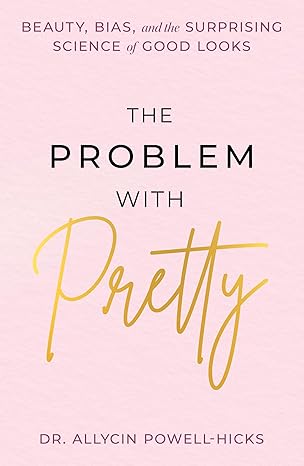
The Problem with Pretty

The new June book The Problem with Pretty I checked out of the library.

The author has a PhD in Health Psychology with a focus on perception. In the nonfiction guide she rightly asserted that it’s often white men in control in the patriarchy who judge you and me as either pretty or ugly.

It’s far better to engage in self-adoration at our own hands and hearts. Instead of waiting for or wanting others to stamp us as beautiful.

Th real curiosity is that I didn’t ever think about my body except when I weighed 138 pounds and wanted to lose weight. I lost about 20 pounds over the decades. Today I’m OK with the number on the scale.

What interests me more is having the “functional fitness” to carry home a 25-pound tote bag of groceries or a tote bag full of gifts from a local boutique.

The curious reality is that I didn’t think about whether I was pretty–either in my eyes or in other people’s eyes at all when I was younger. It wasn’t until I turned 50 that I looked in the mirror and realized I was photogenic.

Yet even I face with my pretty face ghosting on OKCupid and scammers on Plenty of Fish.

Only being thin and pretty ironically guarantees that sleazy men will come after you. As well when you’re thin and pretty and INTELLIGENT men aren’t interested in you. They want you to open your mouth to kiss not speak.

As it stands, I’m not proud of how I look. It’s an accident of genes at birth. Nothing I fought for and won.

Those of us whose mother is 88 and still alive and kicking. When she has wrinkles like rivers and purple mottled skin. Should not care about our looks but our longevity.

What good is the plastic surgery if we’re not eating well and breaking a sweat? The Grim Reaper when they come looking for us is not going to be fooled by a pretty face into thinking it’s not our time to enter the pearly gates.

The author asserts that women who have a connection to their ethnicity and take pride in their heritage are immune from internalizing the pervasive beauty shame that all too often plagues us.

Buy The Problem with Pretty or check it out of the library. It was published this month in June and has two 5-star reviews on Amazon already.

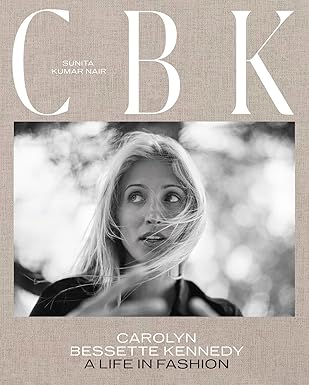
CBK: A Life in Fashion

I checked the book above out of the library. I wasn’t charmed by the narrative. As I would’ve liked to hear about Carolyn Bessette Kennedy’s humanitarian efforts if she engaged in any. I wasn’t enamored of the focus on her beauty actually.

One detail that I took in positively was the authors reference to how CBK was naturally attuned to choosing and wearing clothes that fit her body.

I wrote in here years ago that the motto of a woman’s fifties should be: “There’s nothing I won’t wear, and I’ll try anything once.”

After reading CBK: A Life in Fashion I would like to follow up that assertion with a codicil: We should wear the items we feel good in. And I think it’s true that we’ll feel good in the items that fit and flatter. Without having to tug or tussle with a skirt or other clothing item.

In the Science of Fitness magazine an article referred to how women in order to feel good about our bodies should dress in our favorite clothes that we like to wear and feel good in.

Every wardrobe should have at least 5 of these outfits that are winners if you ask me. An outfit we can choose on those days. A day where we don’t want the attention to be on us. A day where we need extra confidence. And so on.

CBK wore black almost always. She was also drawn to beige. Beige. No kidding.

The rule allegedly stated that an older woman should buy a gray cashmere sweater. No way for this blogger!

I think finding your seasonal colors and wearing those colors that you look good in will brighten your mood not just your face. I happen to be a Winter by the way. My favorite color to wear is hot pink.

Though I say it’s OK to dress in your favorite colors–seasonal color theory be damned! I simply don’t like to dress in neutrals like ivory, beige, camel, gray, brown, and mustard.

Come on really–how many of us really look good in a mustard sweater?

I’d say to check CBK: A Life in Fashion out of the library. It’s an easy, breezy read that should be accepted for what it is: A joyful ode to a woman who cheered up and cheered on the people she worked with at Calvin Klein and interacted with in the designer stores she shopped at.

I say to not discount reading “fluff” as even I’ve stopped reading hard-hitting social science nonfiction. I recommend checking out of the library books on self-help (150s), beauty (646s), business (650s), and design (747s)

Perhaps reading CBK: A Life in Fashion could be a momentary escape on a rainy day.

I’m all for a different kind of entertainment like readings books, listening to music, and making art. Instead of hours-on-end social media scrolling.

Allora. Now Then. Let’s have fun this summer.

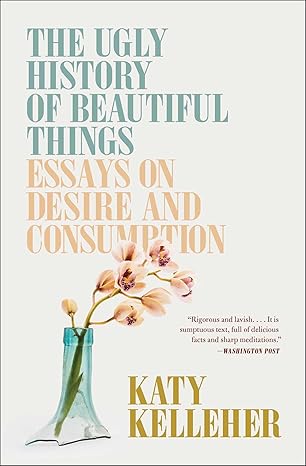
On Coveting Beautiful Things

The book above I read in five hours. The author mines her personal history as a depressed teen slathering on makeup and collecting seashells to plumb the perils of hoarding beautiful things.

Those marble countertops in the kitchens of the rich homeowners she profiles for a design magazine come with a high cost. The illiterate Latino men who work in the marble factories get ill inhaling the silica dust and can even die from lung disease.

Those dozen red roses appearing on Valentine’s Day every year are cut and harvested with modern slave labor. My Romeo doesn’t have to give me roses.

At the end of the book the author cops to her everlasting infatuation with the cut flowers and her sooty mascara.

What’s a gal or guy or even a person who doesn’t identify as either supposed to do when we’re attracted to glitter born of gloom?

My plan is to plunk down cash on only two new tee shirts for my summer wardrobe. Those velvet-flocked hangers are a curse because they allow you to cram tons of clothes into your closet.

Reading The Ugly History of Beautiful Things I had an intense distaste for the colonizers and their dirty deeds in trading with countries like China and India in the 1700s and 1800s. The author details how explorers along the Silk Road were nefarious in treating the native people. This is the ugly history of consumption.

How to sparkle and shine and buy cut flowers with impunity? It hinges on advocating for worker’s rights first of all. Voting with our wallets.

It comes down to what I wrote about in my health and fitness blog: I promoted there my Little Bites philosophy of not biting off more than you can chew and consuming everything in moderation.

This is borne out by research that the authors of Happy Money cite: The fewer items you have the more you’ll like each one.

Let’s go for a little glam as a special treat and opt out of overconsumption. Our wallets are not bottomless wells. Our joy can be infinite with consideration of the ugly history of beautiful things before we take home everything that attracts us.

I confess that it’s all too easy to experience overwhelm seeing the overstuffed closet. The rod to hell is paved with unused purchases.

My hope is that I can give followers hope: Once you Just Say No to impulse buying that overwhelm should be reduced if not totally end. I know that I saved my sanity when I carefully considered what I wanted to buy. No more heading to the register with whatever catches my eye!

In this regard a new book about the art of dressing that I’m reading now I’ll review soon. We really don’t need 500 items of clothing clogging our closets and dumped in our dresser drawers.

I feel like I’ve been a broken record in writing about this too. Perhaps though it can be a refresher to boost our confidence. Too often too many of us do what we think we’re supposed to do and follow along in doing what’s popular like loading up on fashion loot. To get other people’s approval we often mirror what they’re doing.

So I’d like this blog entry to be a liberating voice of hope that gives followers permission to say: “No way. I can do without that latest gimcrack and still be happy.”

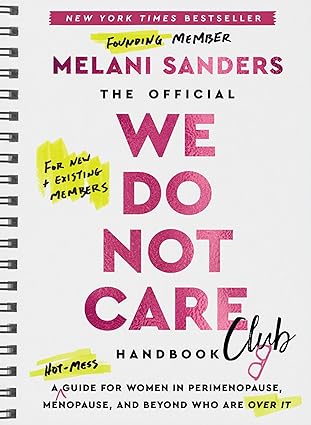
On Not Caring

I received a free copy of the guide above. It’s laugh-out-loud funny in parts of the book.

The We Do Not Care Club has gotten over caring about the inequities of the changes you experience as a woman getting older.

Like the sudden muffin top. Just put on a tee shirt or blouse that covers the side of your waist bulging over your jeans. Wear a cropped top to your heart’s content when you’re home and no one’s around.

Post-40 we have the right to get out of bed at 1:00 a.m., turn on Netflix, and watch old Seinfeld episodes until the rooster crows. The iconic New York City laugh-a-minute sitcom is the cure for whatever ailment has come on.

The ideal issue to not care about is throwing money at conveniences like a housecleaner or a meal delivery service.. If you can afford to spring for these things when you’re 50 I say: Just Do It.

You can join a real We Do Not Care Club in your area or online devoted to a specific hot-mess dilemma.

Perhaps the liberating effect of not caring is the ultimate rebellion against the patriarchal-induced shame women all too often follow lockstep into having.

After reading the guide I was ready to kick ass.

As it’s nobody’s business but yours and mine how we choose to live our lives when we’re in perimenopause, menopause, and beyond.

Perhaps us Generation X girls paved the way for others to rock the world on fire with their confidence.

We Do Not Care. End of Story.

Others should not care that we do not care.

Coming together to laugh and cry over what we’re experiencing surely is the remedy for believing the lies that we’re over the hill and have an expiration date for vitality.

In the end though I do care about having vitality in the face of my body and all its parts veering east west and south.

I hope you will join the sisters in the We Do Not Care Club. Even if you don’t identify as a woman surely you have things not to care about either when you’re getting older.

Bending the Rules

I checked the above new book out of the library. I liked the guide for its historical perspective on how individuals have dressed in Fashion Beyond the Binary for hundreds of centuries.

However, as ever I dislike using labels of any kind. Do away with the labels. Choose your own definition. Invent a new word to describe yourself that no one else is using.

I champion that the best way to defy a stereotype is to be the Ineffable You. Leave them guessing. Choose your own self-definition that has nothing to do with a term assigned to everyone everywhere.

It could be that “birds of a feather flock together.” Yet I’m interested in Fashion Beyond the Commonplace.

Self-expression is the ultimate form of healing and bridge back to health. The only thing hanging out in a closet should be a fabulous frock not our identity.

To dress to please yourself in however you want to dress is the way to go. So even if you’re a girl who dresses in skirts it’s how you style your outfit that can be unique. Each of us tells a story through our clothing.

The road to Identity Freedom is paved with fashion choices that give us sartorial freedom. Our outfits are the vocabulary we use to express ourselves.

Chris wears the boots in this town. Not stilettoes. And so too followers can decide for yourselves how to dress and define yourself when the language is limited.

The New Eco-Conscious Way

This book is a riveting read that I read through in only one day.

There’s another way of being eco-conscious and that is to attend to our personal economy. Though this book touches on how women prop up the external economy it’s worth talking about the money measures we take to keep ourselves afloat financially.

I’m waiting on that kind of book that doesn’t insult readers by assuming all women are clueless when it comes to our finances.

The author of Swiftynomics reinforces the myth of the all-good mother. I might be reading into this however it appears the author buys into the myth of motherhood as the ideal role for women in society.

In the end, when she listed options for righting the injustice talked about, she should’ve included the alternative of choosing not to have kids.

Swiftynomics is the call to pay mothers cash for raising their kids in the home when they don’t have a job.

I think all women should be paid for caregiving. Even those of us who are members of the Open Faced Sandwich Generation: single women with a career and no kids who are caregivers for older parents.

Sadly, doing right the thing and giving a payment to caregivers will be seen as a socialist grab-bag by the ruling elite including women elected leaders.

To her credit the author talks about women who have banded together to alleviate the burden of caregiving. Like when mothers at the height of Covid formed Education Pods where they set up computers in garages and hired teachers or others to instruct their children.

Though that option really was limited to well-off women. What’s the solution?

To decide for ourselves if we want to have kids. And if we choose to start a family nail our boyfriend or husband or other partner to chipping in equally to child-rearing and household chores.

Pay for a housecleaner if we can afford to have someone come clean. Put our shoes down and insist that our partner see things our way.

Lastly where the author of Swiftynomics errs is in saying that women’s caregiving is invisible labor.

It’s not invisible. The elected leaders in power can see clearly that women are wrecking our health and finances engaged in this burden of unpaid emotional and often physical labor.

They simple think we should want to do this caregiving. That it is our natural role in life and the highest good to aspire to.

Tell that to a daughter whose mother or father has been a narcissist that harmed their children. Then having to care for this parent seems like a raw deal.

I rest my case. Read this book anyway. It really is a riveting read.

Simply More

Buy the book! I contest that even if you’re not a person who has been told you’re “too much” you could be a person that others frown on simply for taking up space.

Either way Cynthia Erivo in her just-published manifesto gives readers permission for us to be the fullest iteration of our ourselves.

Despite with and because of the fear we might have this is exactly why each of us should not cater to cowards. Kick the shame that others try to impose on us too.

I recommend installing Simply More on a device like an iPad. It’s worth reading again and again in moments of self-doubt. At the times when we are tempted to internalize the shame.

The administration of the Royal Academy of Dramatic Arts/RADA discriminated against Cynthia Erivo while she studied there in England. Then the actor wins an Emmy Tony and Grammy. RADA courts her as their Vice President which she is today.

Cynthia Erivo’s story is exactly the lantern to shine for all of us to walk down our path to freedom from fear and shame. The actor illuminates all the colors of everyone’s self-worth.

Sadly I don’t think the hate and judgment will ever go away. They’re the evergreen expressions of cowards who are too insecure in their own inferiority complex to give others applause.

Take the stage I tell you. Be too much. Be yourself. Shine brightly like a ball of fire or have a quiet sparkle either way.

2026 is arriving soon. The time to pump up the volume on praising each other for our badass beauty.

Today more than ever we need more brave lamp lighters casting a glow in the darkness.

The Wilderness

This  is a photo of the book The Wilderness by Angela Flournoy.

Though I checked this book out of the library I’m going to buy a copy. As since I’m an author I want to use the novel as a reference for how exactly Flournoy aced craft to plot the narrative and how it unfolded.

The Wilderness was published in 2025. The novel was longlisted for the National Book Award. Flournoy should win this literary prize.

The 5 characters in the book are individuals who are more real than in real life in ways.

The Black American women’s lives take place in the novel from their 20s through 40s. I would rather read a book like this than some kind of “Boys of Summer” beach read at this time in my life.

I recommend buying this book to read or installing it on your Kindle or iPad. It’s one of the greats of literature.

MicroJoys

Microjoys book cover

The above book is inspirational and motivational. The guide does not attack the reader or present a political ideology. So refreshing in today’s climate where the media darlings are given book contracts and column space online to spew negative feelings.

I recommend installing this book on a Kindle or iPad to re-read when you need a shot of positivity while going through a tough time.

It’s a breezy read even though the author recounts two dire events in her life. We cannot discount the hell and heartache that goes on for others. Yet we can lift each other up instead of cutting each other down.

Isn’t it wonderful to know that the little things we do to feel good can have a big impact? No need to book a costly vacation to Cozumel or another beach to boost our mood. Joy can be found in the everyday acts and ordinary things we surround ourselves with.

Magnificent!