Living Life in Balance

Life out of balance is no way to live.

I remember watching that 1982 movie Koyaanisqatsi or Life Out of Balance in college. The Madonna “Ray of Light” video looks eerily like the animation in Koyaanisqatsi.

How human beings ravage the natural world is out of balance. How institutions in society treat people is out of balance. I have read books written by Conservatives and while their arguments appear bulletproof on closer analysis they are shot through with Swiss cheese holes.

It might be that I’ll always be a Lefty. It might be that my focus on fitness as a lifestyle is not popular and won’t ever be popular. I turned 46 and decided to make fitness a priority. I’m 50 now and I’ll say this: it’s to our government’s benefit if you’re in ill health and unable to be strong enough to become a citizen activist.

The lack of faith in the U.S. government according to studies is at an all-time high. We’re so disgusted that we don’t think anything we could do would change things. I certainly don’t think my letter-writing to my congressperson about mental health reform will change things. So those in authority are quite happy that ordinary Americans have given up

It starts and ends with fitness in my view because first of all each of us has to take care of ourselves in order to have a healthy, prosperous life. I define “prosperity” not solely in monetary terms. I define being prosperous in terms of having a bounty of strength, optimism, and what’s commonly called “agency”: a sense of purpose in our lives and the ability to do what we’re passionate about.

It comes down to fitness then.

I absolutely value having a fit mind and a strong body. This isn’t a stigmatizing belief. Everyone living on earth is capable of having their own version of a healthy recovery. Not everyone is going to dead-lift 205 pounds and that’s okay. That’s not the point.

The point is that achieving our own version of “well” is a noble goal to strive for.

Living a balanced life–what I call living life Left of the Dial–is also a noble goal if you ask me.

That’s why I say: forget the government. Forget elected officials who have memorized the Ayn Rand playbook. That is no way to live your life: expecting that any other person has the power to give you things.

I say: it starts and ends with each of us taking action in our lives to create a better life for ourselves.

I’ll end here by saying that now is the time for everyone living in recovery to expect great things. Now is the time to support each other in setting goals and going after what we want.

The days are long gone when we should have to ask permission from any other human being in order to have a better life in recovery.

Recovery is our right. Health is our right.

Living life in balance is something to think about.
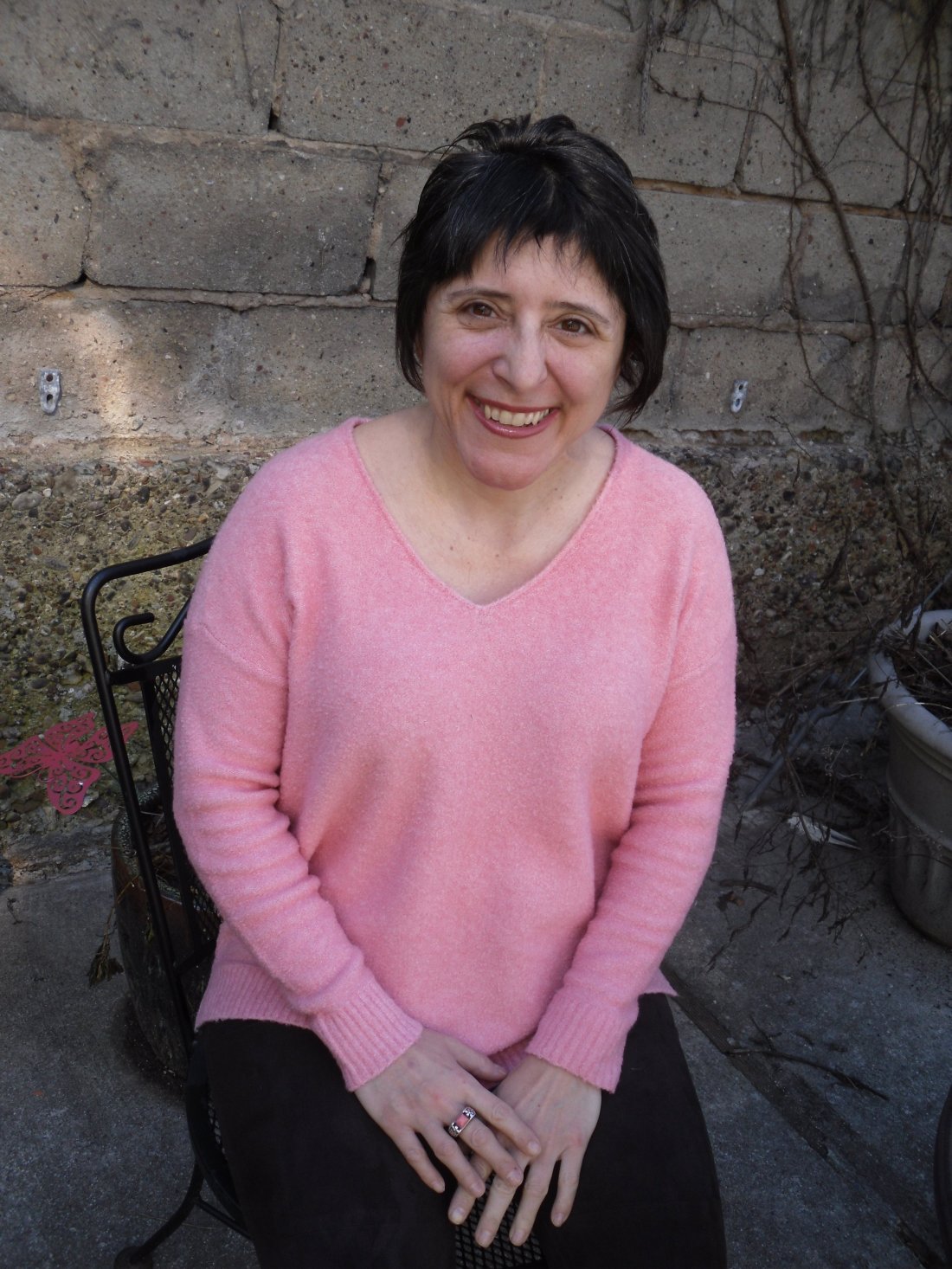
 

A Long Life to You!

baby pink sweater outside
Cheers

You’re supposed to use photos in your blog entries so that Google ranks them higher in search. This photo is a little too big if you ask me.

I just say no to fillers, Botox, and lip injections. It all looks plastic to me when a woman over 40 has no wrinkles.

This photo was taken after a haircut. I recommend you have your hairstylist shoot your photo after a good haircut.

At 50 a woman should let her face breath every so often. The war paint look is aging. If you’re afraid to look at yourself, there’s more going on in your head than meets the eye. If you don’t like yourself, that’s sad when most likely you’ll have more years to live.

A guy I know who’s taken schizophrenia meds since he was 13 is now 72. A shortened life span is not inevitable. It’s a myth that needs to be retired. People who stay in mental health treatment become well enough to monitor any co-occurring medical health risks. Thus we live longer as a result.

The start is to quit smoking. My 72-year old friend didn’t ever smoke. Nor do I. I’ve always detested cigarette smoking from the time I was a young kid. I was easily nine or 10 years old when I had a distaste for cigarette smoking.

Give up smoking–I implore you to quit smoking now if you’ve taken up this life-ending habit. It’s not ever too late to quit smoking. Three women I know who smoked two packs a day for 40 years now sleep and travel everywhere with oxygen tanks.

Guaranteed to give you emphysema, COPD, and a drawn and gaunt, wrinkled-early face.

Give up drinking colas and sodas and soft drinks as the other thing you do if you still imbibe sugary or fake-sugar sweet pop. Doing only these two things–quitting smoking and not drinking colas–are the two best things a person can do. The proof is in how I look..I refused to start cigarette smoking; I refused to drink Coke or Pepsi.

Vanity is a legitimate reason for not doing any of this if you ask me. Living a happier, healthier, longer life is also a good reason for not doing any of this.

Besides…I have a date at a gastro pub that plays cool music.

A long life to you too!

Thinking Positively

I’ve found an effective solution to dwelling in the past: focus on the positive instead of the negative. Yes: it is easier to do this

Think: what was good about your past life even though most of it wasn’t great? A New York Times article revealed that people who rewrote their history to frame it in a positive way healed better and had better health.

Anais Nin wrote in one of her diaries: “You have the right to select your perception of the world.”

I think of this after reading an interview with Ice Cube in Rolling Stone. He founded NWA and now stars in movies. If you ask me he has a poor attitude: He in effect told the reporter: “I’m black so of course no one likes me.”

I’m not going to attack and judge a person for believing what they do. It’s just that as I read the Ice Cube interview and thought about it I realize each of us has a specific worldview. In this way the truth is always elastic depending on who’s doing the stretching.

If that’s what a person believes, it’s true for them. It’s their truth regardless of whether something really happened or didn’t happen.

I’ve been thinking about this also as it relates to stigma and how a lot of consumers perceive that stigma is pervasive and having a diagnosis is shameful because other people think they’re crazy.

I say: get over it.The more pressing concern is that blaming stigma or blaming other people–regardless of who or what you’re hating or blaming and why you’re hating or blaming–is not a healthy way to live.

The fear of stigma will hold a person back even when there’s no actual stigma.

I do wish Ice Cube would get over himself. He’ll certainly get Rolling Stone to sell thousands of copies of the magazine.

My stroke of insight was that focusing on the positive is the way to go. I have long railed against the time I spent in the community mental health system. This week when I chose to focus on the positive everything changed for the better.

Focusing on the positive–choosing to think positively–is all too rare in a society where people like Ice Cube and others make polarizing statements.

I say: find the good in your life and in other people. Keep an open mind that good people exist in the world. Take back control by deciding to focus on the positive.

If you ask me, focusing on the positive is the best use of our time and of our mental energy. To this end I will focus on the good when I post blog entries here.

I’ll branch out in this blog to write things that no traditional publisher or mainstream Internet website is going to publish. No other outlet wants to publish what I write because there’s nothing shocking or sensational about what I propose.

I’ll start by writing about right here right now because today more than ever it’s a great time to be living in recovery.

Living an Organic Life

One definition of organic is “denoting a relation between elements of something such that they fit together as parts of a whole.”

This is what I’m referring to in the Mission Statement link on my author website. Living an organic life is the true premise of Left of the Dial: where our thoughts and feelings, actions and values are aligned and in balance.

I’m interested in how elements fit together as part of a whole. The goal as I see it in recovery is to be whole and well. You can have a full and robust life.

In this regard I don’t discount that a lot of times a person’s life is changed forever after they’re diagnosed with bipolar schizophrenia or another mental illness. Yet here too life can be beautiful even though it’s hard.

The goal as I see it too is to find what gives you joy and satisfaction and go do that as long as it’s healthy.

One thing I firmly believe: it’s not the enormity or severity of a challenge that determines a person’s fate but how they respond to that challenge. It’s possible to find pockets of joy even though a person struggles or is in pain.

In this regard I have been famously assailed because of my love of fashion and makeup. Yet I can tell you without a doubt that my interest in fashion was one of the prime factors that helped me do better in my recovery.

For you it might be painting or sketching. For another person it might be hiking a mountain trail.

The point is it’s interesting to me how these elements come together in an organic way. And when our lives are out of balance it’s often because we’re caught up in busywork that is out of synch with who we are.

I will write in here about my theory on this next week.

Having a Full and Robust Life

I’m not a fan of labels like psychiatric survivor. To me a survivor is merely someone who survived an experience. I’d rather be a winner: a person who got in the ring and fought the illness and was the last one standing.

In recovery as in life there are no guarantees. We have to treasure what we have because it could be gone tomorrow. That’s what I would tell anyone who doesn’t have a mental illness too.

I want others to focus on the humanitarian work I do not on what I’ve achieved for myself. I use my experiences to uplift and inspire others–true–yet my goal was not to claim that everyone can do what I’ve done or has to do what I’ve done to be given credit in society.

Since I first started blogging years ago I’ve championed that each of us figures out what makes us happy and goes and does that. Your blueprint for living your life is going to be different from mine.

My ulterior motive was to show how I rose up against the stigma the mental health staff tried to reinforce when I dared tell them I wanted to get a job and live independently. My contention has always been that a person diagnosed with schizophrenia should not settle for less than full participation in society on equal footing with everyone else.

Most people covet having a “normal” life or covet being “normal.”

The book flap for Kelly Cutrone’s Normal Gets You Nowhere defines normal as:

“according with, constituting, or not deviating from a norm, rule, or principle / conforming to a type, standard, or regular pattern / of, relating to, or characterized by average intelligence or development.”

That doesn’t sound like something I ever wanted to be though at one point I wanted to be “free from mental defect” another definition of normal.

Like I said I consider myself to be an ordinary person. I simply wanted to do great things. That’s the difference: each of us has gifts we were born with to use to better ourselves and others in the world.

Everyone has God-given gifts and talents. No one is better than anyone else because in this regard we’re all equals: we have gifts and talents. Daring to use these strengths to create a better life for ourselves and others is the secret to success in recovery.

I make the case for striving to have a full and robust life not just surviving hell and living a life of anger and resentment.

A trend has come on to champion having an ordinary, average life in recovery. Yet I don’t think a person is ordinary or average even if they have a “normal” life. I think greatness lies in each of us regardless of whether a person has a masters degree or is a JD or MD.

That’s why shortly I’m going to feature other peer stories in here. I promised this a couple of months ago and I should be able to start this in September.

A lot of people still cling to using a label like psychiatric survivor. My goal is to showcase peers who have real lives apart from their illness and apart from their diagnosis.

Having a normal life doesn’t appeal to me: having a full and robust life does.

That’s what I intend to do: feature peers who have full and robust lives. Stay tuned.