Project 333 Clothes Encounters

After reading Project 333 I thought long and hard about when we should welcome discomfort versus when it’s better to feel confident.

Ultimately feeling good in our clothes is what we should strive for. Thinking about using a capsule wardrobe I realized that each of us should dress to please ourselves. We don’t need to step out in clothing trends or outlandish outfits.

Dressing in clothes that are ill-fitting, make you appear sick or tired, or that you’re simply not comfortable in is a mistake. It’s the surefire way to feel miserable all day.

Breaking the fashion rules and other rules can be fun and is often necessary. Isn’t it likely that other people expect us to conform to how they think we should behave precisely because they have their own insecurities they can’t live with. They want us to be company in their misery.

Courtney Carver frowns on thinking you have to do things perfectly.

No—I didn’t follow the guidelines to the letter. You can revise how you execute Project 333. My collection is geared to 39 to 44 items so technically you could call it Project 339 or 344.

Plus there are about ten or eleven items of clothing that I don’t wear that I haven’t discarded or donated. They don’t get in the way of reaching for the ones that I want to wear. So they stay for now.

My jewelry items are listed separately and Courtney said that’s OK. Nor do I count hats tote bags coats pocketbooks or bandannas.

In the summer I list under one item number each my black and white tee shirts. Since they are basics and I own three or four of each color. Those tee shirts get worn-out fast so it’s fine to rotate wearing more than one. Then list in the 33 only one white tee and one black tee when you actually use more.

The alternative is to wear only one white and one black tee shirt. Discard them at the end of the season when they get grubby. Then buy one new tee each summer.

Again Courtney Carver wrote that you don’t have to do this in a perfect way or follow her 33 guideline to the letter.

Coming up my winter capsule wardrobe.

True Style

The second book I checked out of the library was True Style is What’s Underneath: The Self-Acceptance Revolution.

A candidate for a PhD on recovery interviewed me. She asked what I thought the most positive thing was that came from being unwell.

“I value difference,” I told her.

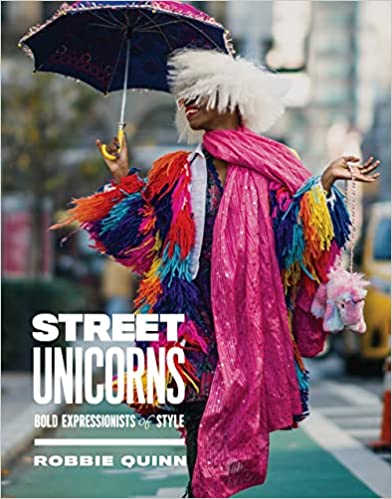
The unique individuals in this guide take off where the others started in the Street Unicorns: Bold Expressionists of Style book I reviewed in a blog entry earlier.

Authors Lily and Elisa had the calling “to uncover what’s underneath authentic style, helping to build a world where getting dressed each morning is an act of self-love.”

I’ll quote from individuals featured in the book as the sparkplug to ignite readers to buy True Style.

Jillian Mercado:

“If you never had to struggle or fight for anything in your life, how could you know who you are and what you’re made of?

If you’re different, that’s sunlight in somebody’s world.”

Tallulah Willis:

“I always say, ‘You know the feeling you’re supposed to have on your wedding day, that you feel like a princess? Why not have that every day?'”

Little old blogger Christina would rather be the sunlight. Not a tornado.

How to Date Your Wardrobe

How to Date Your Wardrobe is a gift book hardcover packed with ideas and insight.

Page 79 sums up author Heather Newberger’s ethic:

“Instead of wasting your time wishing you were a different person, it’s important for all of us to let go of who we think we should be–so that we may enjoy the individuals we already are.”

This sentence has haunted me as it gets at what I’ve been reckoning with in my life. As hard as it can be to act true to ourselves in a society where you’ve expected to conform, I say being who you are is the only way to succeed in life.

The new electric purple lipstick I bought tells it like I am: The shade is called Unconventional Babe.

As sixty beckons for a lot of us it’s the time to do things differently. I recommend trying out a new haircut or taking up a hobby like cooking or starting to exercise.

It’s the perfect time to date your wardrobe and “revive, revitalize, and reinvigorate your style” like Heather Newberger advocates.

Simply creating new outfits has improved my outlook and given me incomparable joy.

Forget following fashion trends. If you don’t feel comfortable in what you’re wearing you won’t feel good or look good either.

I bought this book and refer to it often.

It’s my contention that when things aren’t going right in your life doing what comes easy to you that you like doing will save you from sinking into despair.

In one instant I changed my thinking. Talking about clothes and fashion isn’t frivolous when doing so can lift up others.

Men are not given grief for talking about and following sports.

Why should women be tsk-tsked for talking about dressing up and enjoying clothes?

I tell you it was liberating to get rid of the donation bags.

When you finally own only what you love to wear it makes getting dressed easier.

Seeing those beauties in my closet puts a smile on my face.

Read How to Date Your Wardrobe. Doing so you just might realize that changing your view of yourself can be as simple as changing what you wear.

Sundressed

The 2023 book above I checked out of the library.

The author advocates for wearing natural fabrics that make us feel good wearing them.

She picks up where Maxine Bedat left off in Unravelled: The Life and Death of a Garment.

Lucianne Tonti explores the production process of wool, cotton, silk, linen and other natural fabrics.

How the creating buying and long-term wear of these clothes can be made truly sustainable with regenerative farming of flax cotton and sheep.

After reading Sundressed I knew that as sound as my habits have become I could do more going forward.

Dismayed I was to realize a costly J.Crew coat I bought (at a reduced yet not cheap cost) was not 100 percent wool.

Sometimes it takes reading a book or overhearing a conversation on the train to get a light bulb to go off in your head.

How to Love Our Bodies

I’ve become fixated on dressing in clothes all over again.

The Science of Fitness special edition magazine has an article titled The Power of Body Neutrality.

The key takeaway of this featured article is that you don’t have to think positively about your body every hour of the day.

You might like your hands and not like your thighs. The Body Neutral movement espouses focusing on the parts of your body you really like.

Yes–I’m obsessed with my arms–one with its “kitchen scars” and all.

A surprise suggestion in The Power of Body Neutrality:

Rethink your clothes by sticking with styles you’re comfortable in.

To wit:

“It’s a simple step, but when we’re self-conscious about what we’re in, it just brings more awareness of ourselves to our bodies and what we don’t like about them.”

I for one cannot wear regular blue jeans and feel good.

The quote above from the Science of Fitness hammers home why it’s a mistake to buy clothes that have become popular without thinking of whether you’ll like wearing them once you’ve taken them home.

As I live on the cusp of 60 I’ve taken to rethinking how I want to dress. It might be that I will always dress like I’m a teenager regardless of my chronological age.

Proving that our real age is just a number and the size on a clothing tag is just a number.

If you like how you feel dressed in jeans that’s all that matters.

Loving our bodies is possible.

It’s a radical idea that fits into the Conscious Chic and eco-conscious clothing ethic: save money by buying only the clothes you’re comfortable in. In turn we save the planet and S.O.S.–Save Our Sanity by quieting the internal critic.

How a person dresses often reflects what’s going on internally. Another great reason to choose and use clothing items carefully to either amplify or alter our mood.

It’s true we should like what we’re wearing.

I’m going to take The Science of Fitness mantra above to heart.

Street Unicorns

I checked this new 2022 book out of the library.

Yes–one of the Bold Expressionists of Style(tm) wears a pink pant suit.

My fashion motto is: Dress like you give a frock.

To wit per author photographer Robbie Quinn:

“An individual needs real vulnerability to put themselves out there.”

One of the Bold Expressionists said they dressed in color because they had anxiety and depression.

In my life I find that everything I want to achieve first starts with changing how I dress.

In August two Salvation Army truck drivers carted off 4 donation bags of clothes.

Goodbye to the dull gray and brown items that sapped my energy wearing them. The colors you wear can impact how you feel.

Which must be why the Bold Expressionists often wear loud-and-proud colorful clothing items.

Since I donated the 4 bags I’ve broken my vow not to buy anything new. Adding a pair of silver boots and a pair of combat boots to my collection of shoes.

The older I’ve gotten I’ve become more obsessed with dressing up in clothes that make a statement.

In the 1980s I was a disc jockey on FM radio. Then I dressed in weird clothes and swiped on shocking makeup.

Browsing for unusual digs in Kiss Kiss Kill Kill the punk rock clothing emporium on Bay Street on Staten Island.

Do you readers ever think of the person you used to be when you were young? Or maybe some of you are young.

Nearing the cusp of 60 [in three years!] I find myself on a kick to reinvent how I dress in clothes.

Viewing the Bold Expressionists of Style(tm) in the book Street Unicorns brings joy to my heart.

No one should be afraid to dress to express their authentic self.

Even if for some of us that style is ordinary and not outrageous.

There’s no need to judge how a person looks–or looks in their clothes.

Dressing in clothes is a celebration of life.

The day you become who you are is the real birthday.

My cake has plenty of candles to blow out today.

How old are you? Whatever your age you should not give up on yourself.

My motto for how a person should approach living in their fifties is:

“There’s nothing I won’t wear, and I’ll try anything once.”

Attaining fashion freedom often unshackles us in other areas of our life.

I’ll end here by saying that the Street Unicorns emboldened me to live outside the box. I haven’t met a box I liked having to fit in.

The Power of Plus

I checked this book out of the library.

At the same time I’ve been studying the topic of microaggressions too.

One common comment is “You’d be so pretty if_______.”

I don’t want to trigger followers by typing in the rest of the sentence.

Who in their right mind would think this is a kind and caring thing to say?

Why would they think only thin people are pretty?

In my view I don’t think most people need to lose weight. Some of us carry more weight on our frames.

The author of the Power of Plus is Gianluca Russo an Italian freelance journalist. He exposes the folly of the thin white-centric ideal of beauty that designers foist on fashion models and consumers.

Russo ends the book on a positive note quoting powerful ladies.

To get readers to buy the book or at least check it out of the library I will quote one section toward the end.

Per Russo:

“I never knew what it meant to live authentically until I entered the fashion industry…That is what the plus-size community has taught me: true self-expression is perhaps the strongest power to exist on earth.”

Right said Russo.

If you ask me followers it all comes down to self-expression being the pathway to success.

In 2015 when I published my memoir I was the first woman writing about mental health who talked about how self-expression via dressing in fashion helped her recover.

I knew this then and I know it now: individuality is what makes a person beautiful.

Why should any of us feel the need to conform to what’s viewed as normal or acceptable?

True self-expression is irresistible to others.

Become who you are. Regardless of whether people like this

Shrinking ourselves to make others feel better is no way to live.

Shine on fabulous ladies.

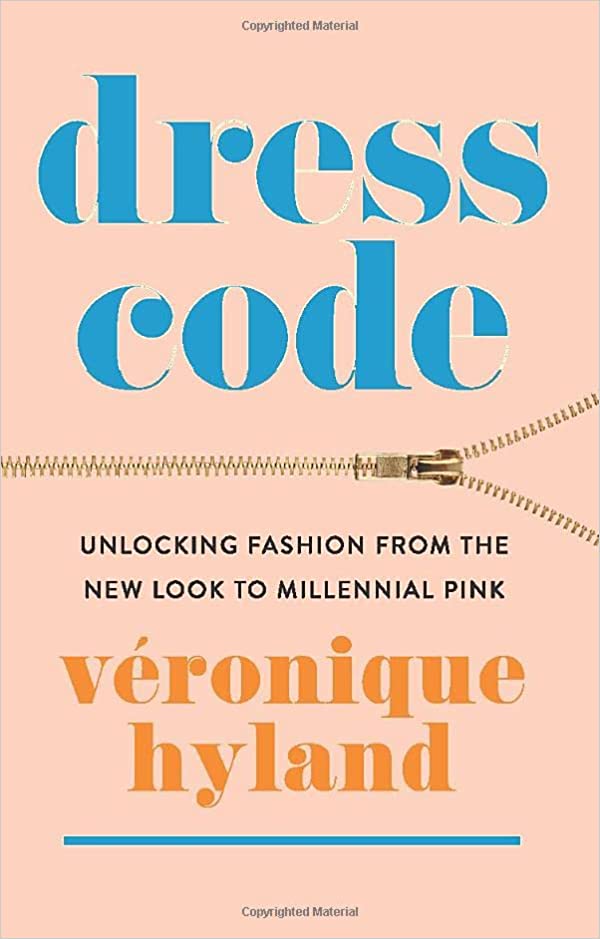
Dress Code

The 2022 book shown above should be required reading.

The author is the Fashion Features Director at Elle magazine.

It’s a biting, incisive critique of the fashion industry, the Instagram Influencer trend, and the obsession with self-care.

I was born in the first year of Generation X. I have zero interest in engaging in the white-women influencer self-care practices or in buying the products they’re hawking.

The only form of self-care I’ve adopted is eating well, walking everywhere, and exercising 2x per week for 30 minutes as often as possible.

In 2011 when I turned 46 I decided that I had to start doing strength training. Before that I hadn’t lifted one 5-pound weight.

In January 2014 three years later I could dead lift 205 pounds at the gym.

No–I didn’t start “lifting” to lose weight. I didn’t do this to attract a man.

In February 2011 I was in a pizzeria having a slice. I could only eat half the slice, and threw the rest away.

I had the sense that something terrible had happened and this was verified that night.

I decided right then that I must start strength training. When women are going through a hard time I doubt most of us in an instant think that the solution is to lift weights.

I’ve failed at performing other acts of self-care. What struck me about Dress Code is the idea that self-care has become an impossible standard to live up to.

I don’t light candles (I’m a firefighter’s daughter afraid my apartment would go up in flames).

Nor am I keen to buy a product like Glossier lip liner in an attempt to feel good.

“Shopping in my closet” to create new outfits doesn’t cost a dime. Listening to music on audacy.com is free too. Checking books out of the library saves money as well.

What upsets me (why?) is the reference to how other women’s ugly bodies are not displayed and fawned over in the fashion media and Instagram accounts.

First: Everyone living on earth is beautiful. There are no ugly bodies in my view.

Why do critics persist in using the term ugly to describe bodies that don’t fit the fashion norm the critics rail against?

Too often women internalize shame about our bodies.

Do you want to know the only reason I exercise and eat well?

My father had Stage 3 colon cancer that spread to his liver.

My great-aunt, grandfather, and 57-year old cousin were in comas at the end of their lives.

My mother had breast cancer. One other aunt had cancer.

With that track record in my family history I won’t take chances by sitting on the couch watching TV all night.

In the epilogue to Dress Code author Hyland gives the rosy view that things appear to be changing and will get ever better in terms of the representation of women on social media.

Do you want to feel good? Then do good. I found a way to do this that I’ll talk about in a coming blog entry.

Finding Happiness

Throwing out four donation bags sparked me to examine the effect of my wardrobe on my happiness.

Wearing dull drab colors head-to-toe did nothing to spark joy.

Could wearing bright colors boost a person’s mood?

Some of us look sharp dressing in gray and brown.

I realized those colors weren’t for me.

The point is: We could all use more hope and joy going into the third year of wearing masks and distancing from each other couldn’t we?

Anything healthy that could help me feel great I was willing to try.

Bring on magenta! Hello yellow! Blast off in blue!

It was clear that saving your health was equally important as saving the planet.

Dawnn Karen in her fashion psychology book Dress Your Life wrote that what you wear can alter or amplify your mood.

Something that the sustainable fashion crowd hasn’t explored:

That having and wearing a ton of clothes that make you feel crummy or tired is a great reason for not buying them in the first place.

The trick is to shoot a selfie of yourself in an outfit in the dressing room or at home after the package arrives.

Photos don’t lie. They’re how I’ve discovered what clothes to ditch and what to keep.

I feel lighter and freer after filling the donation bags.

May you find your way to happiness too.

In the coming blog entry, I will talk about a new book I’m reading that continues where Fulfillment left off.

Unraveled: The Life and Death of a Garment exposes the real truth about the fashion industry’s role in global warming beyond the usual suspect practices.

Maxine Bedat peels away the layers that cover up what goes on.

In a country like America, we can afford to buy the clothes that make us feel good wearing them as well as look good in them.

I don’t take this luxury for granted. The fact that how I dressed could’ve been dragging me down was a revelation. It was crystal-clear to me that the connection between the colors I wore, and my mood and energy was indisputable.

Right after realizing this, I started to read Unraveled. Understanding that sweatshop workers in Ethiopia don’t have the option to dress their best so as to elevate their prospects in life.

Those of us who are well-off owe a debt to society to help others lift themselves up too.

The real deal:

If how I dress can help me overcome depression this enables me in the end to have the energy to do good for others.

This is the win-win we need to have a conversation about:

Buying a $2 tee shirt in Telco is not an option. The female workers who labored to sew that shirt should be paid a living salary so that they too can feel good and not be dragged down living their lives.

Fulfillment

I have just read the book Fulfillment: Winning and Losing in One-Click America.

Alec MacGillis the investigative journalist exposed the dark side of the Amazon.com reign over retail.

Employees have gotten killed working at Amazon warehouses.

Jeff Bezos pays lobbyists millions of dollars to get elected leaders in Washington and elsewhere to do his bidding.

The million-dollar tax breaks given to Amazon to build its warehouses everywhere in the U.S. turn into higher taxes imposed on residents of areas where Amazon sets up camp.

No–I haven’t ever been a fan of Liberals. I detest them as much as I despise Conservatives. The fact that Democrat leaders cozy up to Jeff Bezos will be no secret when you read Fulfillment.

Yes–I have decided it’s too risky and unethical to shop on Amazon anymore.

I use Amazon’s books category to search for new books. Then I order the books from a local independent bookseller to pick up at the store.

Fulfillment exposes the regional economic inequality that is at the root of the income divide in America. Where you live determines your income level and your prospects in life.

It explains how people in rural and other disadvantaged areas voted for Mr. Toupee / Donald Trump.

Another book that I haven’t read exposed the dark side of Mr. Toupee’s Economic Development Zones. That book’s author alleged the ordinary citizens living there were fleeced not given great jobs.

It begs the question that the tide is rising for no one in America regardless of who we elect.

Fulfillment ends with the author’s hope that Joe Biden will regulate Amazon and other big businesses. I doubt this corrective action will happen.

Coming up I will talk about my private reckoning with the stuff I own. Firsthand I have seen incontrovertible proof that how you dress can heal or harm you.

Never mind the harm done to workers in sweatshops and the pollution of waterways and farmland with chemical waste from clothing production.

Though we should care about this.

Wow–I discovered another bona fide reason for caring about your clothes. How you dress can hold you back or help you grow.

This is a radical idea that no one in the sustainable fashion brigade has talked about: How limiting your clothing choices can spark more joy, energy, and opportunity in your life than you’ve ever had before.

Let’s face it: this self-interested motivation is a great gateway to choosing and using wardrobe items with care and attention.

My journey to freedom and happiness started this month when I filled up four donation bags with clothes, jewelry, and barely worn shoes.

The connection between what I bought and how I felt was the wake-up call for doing things differently.